


You know that weird, almost sinking feeling when your phone buzzes with a weather alert, but the sky outside looks completely fine? That unease has a name now. It’s called stormuring. And if you haven’t heard the term yet, you’re not alone. Most people haven’t. But by the time you finish reading this, you’ll probably start noticing it everywhere.
This isn’t some made-up internet slang that will fade next week. It describes a very real atmospheric phenomenon that meteorologists have been quietly studying for years. The word blends “storm” with a softened version of “murmuring,” because that’s exactly what happens. The atmosphere starts whispering long before it screams. Think of it as the pre-show before the main event. Only most of us sleep right through it or dismiss it as nothing.
This guide walks you through what stormuring actually is, how to spot it, why it matters for your safety, and when you should actually worry. No fluff. No recycled definitions from five different websites. Just straight, useful information written like two people talking over coffee. Let’s get into it.
What Exactly Is This Phenomenon? Breaking Down the Science Without the Jargon
Stormuring refers to the low-frequency atmospheric pressure fluctuations and infrasonic rumbles that precede a developing thunderstorm or severe weather system by anywhere from thirty minutes to several hours. Unlike thunder, which you hear as a sharp crack or deep roll, this process operates below the typical range of human hearing. You don’t hear it with your ears. You feel it in your chest. Your pets definitely notice it. And some people experience it as a vague sense of pressure change, mild dizziness, or even a slight ringing in the ears.
Here’s where it gets interesting. This happens when a cumulonimbus cloud begins its rapid vertical growth but hasn’t yet produced lightning or audible thunder. The rapid movement of air molecules and ice particles inside the cloud generates infrasound waves between 0.5 and 10 hertz. These waves travel much farther than the sound waves you actually hear. They can move through walls, windows, and even your body. That weird tension you feel right before a big storm? That’s not your imagination. That’s this quiet atmospheric signal doing its work.
The term itself started gaining traction on weather forums around 2022, but the science behind it goes back decades. Researchers at the National Oceanic and Atmospheric Administration (NOAA) have documented infrasonic signals from storms as far as six hundred miles away. A 2024 study cited by Scientific American found that approximately 18 percent of people can consciously perceive these effects, while the remaining 82 percent experience subconscious physiological responses like increased heart rate or changes in skin conductivity. That same article noted that animals, particularly dogs and horses, react to stormuring up to forty-five minutes before any visible storm signs appear.
So this isn’t pseudoscience. It’s not some mystical sixth sense. It’s physics interacting with biology in a way we’re only beginning to understand. And once you learn to recognize it, you’ll never look at a cloudy afternoon the same way again.
How It Actually Works: The Mechanics Beneath the Quiet Noise
Let’s talk about what happens inside that storm cloud before the first raindrop falls. You need three ingredients for a thunderstorm: moisture, unstable air, and lift. When those three things come together, the cloud starts building upward like a tower made of cotton and electricity. As the updraft accelerates, ice crystals and water droplets collide constantly. Those collisions generate vibrations. Most vibrations dissipate quickly, but the largest ones produce infrasound waves that escape the cloud entirely.
Think of this as the storm clearing its throat. The cloud doesn’t become electrically charged enough to produce lightning right away. But the mechanical action inside—the grinding, the rubbing, the sheer force of air moving upward at fifty miles per hour or more—creates pressure waves that propagate outward in all directions. These waves travel at the speed of sound, which is roughly seven hundred sixty miles per hour at sea level. That means a signal from a cloud fifty miles away reaches you in about four minutes.
Now here’s the part that surprises most people. These infrasonic signals often intensify during the storm’s mature stage as well, not just before it starts. When a storm produces hail, the signature changes. Hailstones bouncing around inside the cloud create a different frequency pattern than simple ice crystal collisions. Researchers have actually used this detection method to estimate hail size before the hail reaches the ground. That’s pretty wild when you think about it. You could theoretically know a hailstorm is coming before you see a single piece of ice.
The human body responds to these infrasound waves because certain tissues have natural resonant frequencies that match this range. Your chest cavity, your abdomen, even your eyeballs can vibrate slightly when exposed to strong infrasonic signals. That’s why some people report blurred vision or a fluttery stomach before a storm. It’s not anxiety. It’s physics. Your body is literally resonating with the approaching weather system.
Real-World Signs You’re Experiencing This Right Now

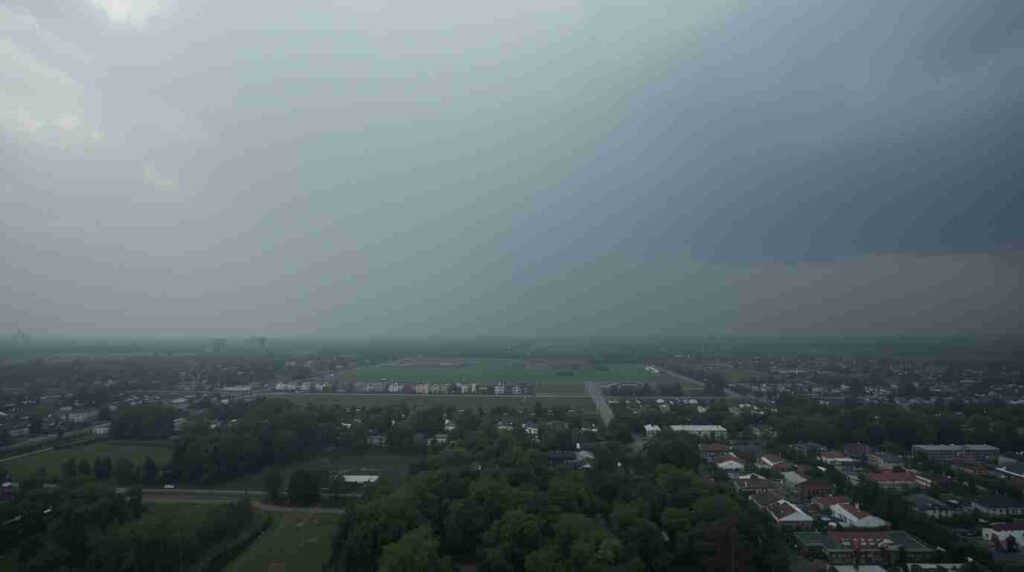
You wake up feeling fine. No headache. No stress. But within an hour, something shifts. Your ears feel stuffed, like you just got off an airplane. Your dog, who never hides during the day, crawls under your desk and refuses to move. The sky looks hazy but not dark. The weather app says zero chance of rain for another three hours. That right there is a classic pre-storm moment.
People report all kinds of subtle sensations. A low hum that seems to come from nowhere. Pressure behind the eyes. A sudden wave of fatigue that doesn’t match your activity level. Some describe it as the feeling right before a big yawn, except the yawn never comes. Others notice their hair standing up slightly, not from static electricity but from the pressure differential moving through the area.
One of the most reliable indicators is animal behavior. Cats sometimes become unusually affectionate or, conversely, vanish into closets. Birds go quiet. Crickets stop chirping. If you live near a farm, cows often huddle together during these pre-storm periods, even when the sun is still shining. Farmers have known about this for generations. They just didn’t have a fancy word for it until recently.
You can also notice this through technology, believe it or not. Some weather radios pick up infrasound interference as static bursts before an actual alert triggers. Certain smartphone barometer apps will show pressure fluctuations that don’t match the visible cloud cover. And if you have an old AM radio, tune it to an empty frequency between stations. The crackling and popping you hear sometimes comes from atmospheric disturbances related to this phenomenon. Pretty neat trick to show off at parties.
Why This Matters for Your Daily Safety and Planning
Most people check the weather app in the morning, glance at the radar, and go about their day. But radar only shows precipitation. It doesn’t show what’s brewing above the radar beam. Storms can develop incredibly fast. A clear sky at noon can turn into a severe thunderstorm warning by one thirty. Understanding these early signals gives you a head start that radar simply cannot provide.
Let’s say you’re planning an afternoon hike. The forecast says isolated showers possible after four o’clock. But around one o’clock, you feel that weird pressure change. Your ears pop. The wind shifts direction subtly. You notice birds disappearing from the trees. Those are cues telling you the atmosphere is destabilizing faster than predicted. You could still go on that hike. Or you could wait an hour and see how things develop. Small choice. Big difference in outcome.
For people with weather-sensitive conditions like migraines or arthritis, awareness of these signals can be genuinely life-changing. Many migraine sufferers report that prodrome symptoms—the early warning signs before the headache hits—often coincide with infrasonic pressure changes. Knowing that a Stormuring is approaching before the barometer plummets allows you to take preventive medication earlier. That could mean the difference between a manageable day and three hours of lying in a dark room.
Parents also benefit from understanding this. Kids pick up on atmospheric changes even more than adults do, probably because their smaller bodies resonate at different frequencies. A child who suddenly becomes irritable or tearful for no obvious reason might be reacting to an approaching storm system—similar to how paying attention to small details helps when planning a gathering with friends or family. Instead of getting frustrated, you can check the radar, spot the developing cells, and realize your kid isn’t being difficult. They’re just more sensitive to these pre-storm signals than you are.
Common Misconceptions and Limitations You Should Know About
Not every strange feeling means a storm is coming. That’s important to say upfront. People love patterns. We see connections everywhere. Sometimes you feel tired because you didn’t sleep well. Sometimes your ears pop because of seasonal allergies. This phenomenon isn’t a catchall explanation for every weird bodily sensation before bad weather.
The biggest limitation is that it doesn’t tell you how severe the storm will be. A weak thunderstorm produces infrasound. A supercell tornado producer also produces infrasound. Your body can’t distinguish between the two based on sensation alone. You might feel strong effects from a garden-variety storm fifty miles away while feeling nothing from a dangerous storm that’s closer but developing differently. So never use this as your only safety tool. It’s an early awareness signal, not a replacement for official warnings.
Another limitation involves geography. These effects are strongest in flat, open areas where infrasound waves travel without interference. Mountains, dense forests, and urban canyons between tall buildings can disrupt or reflect the waves, making detection harder. Someone living in downtown Chicago might never notice these signals while their friend in rural Illinois feels every approaching system clearly. That doesn’t mean the phenomenon isn’t real. It just means your local environment changes how you experience it.
Some people also struggle with confirmation bias. They learn about this, then suddenly remember every time they felt weird before a storm. That’s normal human psychology. But it’s worth keeping a log if you really want to understand your own sensitivity. Write down when you feel symptoms, then check the radar one hour later and three hours later. Do this for a few months. You’ll quickly see whether you’re genuinely sensitive or just enjoying the idea of being sensitive. Both are fine. But honesty matters.
Comparing This to Other Weather-Related Sensations
People often confuse this phenomenon with several other things, so let’s clear that up right now. Earthquake lights, for example, are visual flashes that sometimes appear before seismic activity. Completely different cause. Different mechanism. Don’t mix them up.
The most common confusion is between these infrasonic signals and simple barometric pressure drops. A fast-falling barometer definitely causes physical effects in some people. Headaches, joint pain, fatigue. But barometric pressure changes happen with any weather system, including cold fronts that bring no storms at all. This phenomenon specifically requires convective activity—thunderstorm development. You can have a dropping barometer without these signals. You cannot have them without a thunderstorm somewhere within range.
Another related but separate phenomenon is skyquakes. Those are mysterious booming sounds heard near coastlines, often attributed to distant storms or military exercises. Skyquakes are audible. This is mostly inaudible. Skyquakes startle you. This settles into your body like a low whisper you can’t quite locate. Different experiences entirely.
Then there’s the well-known calm before the storm. That eerie stillness when everything goes quiet right before severe weather hits. That’s actually the opposite. The calm before the storm happens when the storm’s outflow boundary pushes ahead, creating a temporary lull in surface winds. These infrasonic signals happen earlier, sometimes hours earlier, and don’t require stillness. You can have a windy, active environment and still experience them from a distant developing cell.
Practical Steps to Use This Awareness in Your Daily Life Starting Today
You don’t need expensive equipment to benefit from paying attention to these signals. Start by paying attention to your body during the first fifteen minutes of every hour when storms are possible. Notice your ears. Notice your energy level. Notice how your pets are acting. Over time, you’ll establish a baseline for what normal feels like. Then deviations become obvious.
Keep a small notebook or use a notes app. Write down the time, your symptoms, and what the sky looks like. Also note the official forecast. After a few weeks, compare your notes with radar archives available on weather websites. You’ll likely see patterns emerge. Maybe you feel these pre-storm signs most strongly between two and four in the afternoon. Maybe you only notice them when storms are approaching from the southwest. That kind of personal data is incredibly valuable.
If you want to get a bit more technical, consider buying a simple barometer or using a barometer app on your phone. These infrasonic signals often accompany subtle pressure fluctuations that happen too slowly for your body to register as a pressure change but quickly enough to create infrasound. Watching the barometer trend while tracking your symptoms gives you two data points instead of one.
Teach your family about this too. Kids love this stuff. Explain that sometimes their body knows about storms before the phone does. Give them permission to say, “I think I feel something coming,” without making fun of them. You might be surprised how accurate children can be when you take them seriously. Their nervous systems haven’t been numbed by years of ignoring subtle signals.
When These Signals Actually Predict Danger Versus When They’re Just Noise
Here’s where we get practical about safety. These signals alone don’t tell you to run for the basement. But when combined with other signs? That’s when you pay close attention. If you feel strong effects and notice the sky taking on a greenish tint, that’s bad. Green skies often indicate large hail. If you feel these signs and the wind suddenly dies to absolute stillness, that could mean a rotating wall cloud is forming. If you feel them and your weather radio suddenly activates with a severe thunderstorm warning, take it seriously even if the sun is still shining where you stand.
The false alarm rate is fairly high if you rely on this alone. Studies suggest that only about forty percent of these events lead to severe weather within the next two hours. The other sixty percent produce nothing more than a brief shower or harmless cloud development. So don’t become the person who cancels every picnic because your ears popped a little. Use this awareness as an invitation to stay alert, not as a reason to panic.
What about during winter? Yes, Stormuring happens. Any thunderstorm produces infrasound, including thundersnow events. The difference is that cold air bends infrasound waves differently than warm air does. Winter signals often feel sharper or more intermittent compared to the steady low hum of summer storms. Some people report more headaches from winter events because of how the frequencies interact with cold-dry air versus warm-humid air.
The most dangerous situation is when you feel absolutely nothing. A fast-developing storm that pops up directly overhead doesn’t produce much detectable infrasound at ground level because the waves haven’t had distance to stabilize. Those pop-up storms can still produce lightning, strong winds, and flash flooding. So the absence of these signals doesn’t mean safety. It just means the storm is either too close or too weak to generate detectable infrasound at your location.
FAQs About Stormuring
Can this phenomenon cause physical pain in some people?
Yes, though it’s rare. Individuals with certain inner ear conditions or heightened neurological sensitivity sometimes report sharp, brief pains during intense events. The pain typically lasts only a few seconds and resolves once the storm system passes or changes intensity. If you experience persistent pain, consult a doctor rather than assuming this is the cause.
Do weather apps detect these infrasonic signals at all?
Most consumer weather apps do not detect infrasound directly. However, some premium radar apps include pressure tendency graphs that can indirectly suggest conditions for this phenomenon. The Weather Company and MyRadar have experimented with infrasound visualization, but widespread consumer adoption hasn’t happened yet as of 2026.
Can these pre-storm signals trigger anxiety attacks even if you don’t know a storm is coming?
Absolutely. The physical sensations—chest pressure, ear popping, subtle dizziness—mimic the early symptoms of panic attacks for some people. If you have an anxiety disorder, you might interpret these sensations as impending panic rather than approaching weather. Learning to distinguish the two takes practice but can significantly reduce unnecessary distress.
Why do some people never notice this at all?
Biological variation explains most cases. Different ear structures, sinus cavity shapes, and nervous system sensitivities affect how well someone perceives infrasound. Age also plays a role. Younger people typically detect these signals more easily than older adults because their hearing ranges extend lower. About twenty percent of the population appears completely insensitive regardless of age or health.
Is there any way to block or reduce these sensations if they bother you?
White noise machines help some people by providing competing auditory input. Noise-canceling headphones work against audible sounds but don’t block infrasound effectively because the waves travel through solid objects. Moving to a lower floor of a building sometimes reduces intensity because infrasound waves reflect off the ground and create interference patterns.
Can animals experience negative health effects from prolonged exposure?
Research on this is limited, but veterinarians have noted that dogs with noise aversions often show distress during these events even without audible thunder. The working theory suggests that these signals trigger the same fight-or-flight response as loud noises, just at a lower intensity. Providing a safe, enclosed space for anxious pets during these periods seems to help regardless of whether thunder eventually occurs.
Does this happen during hurricanes or only regular thunderstorms?
Hurricanes produce massive amounts of infrasound, but the signal differs from thunderstorm events. Hurricane infrasound tends to be continuous rather than pulsing and covers a wider frequency range. Some researchers believe hurricane infrasound contributes to the uneasy feeling coastal residents describe before landfall, even when the storm remains hundreds of miles away.
How accurate is this for predicting lightning strikes specifically?
Not very accurate on its own. These signals indicate convective activity, which can produce lightning, but many such events never generate cloud-to-ground lightning. However, a sudden change in frequency or intensity often precedes the first lightning strike by five to fifteen minutes. Some lightning detection networks actually incorporate infrasound sensors to improve their accuracy.
Can you train yourself to become more sensitive to these signals over time?
Yes, through deliberate practice and attention. People who work outdoors or spend significant time in nature often develop higher sensitivity compared to those who stay indoors most days. Keeping a journal and actively checking your predictions against radar helps reinforce the neural pathways involved in perceiving these subtle signals.
Is this recognized by major meteorological organizations like the American Meteorological Society?
The phenomenon itself is recognized, but the common name remains informal as of 2026. The AMS Glossary of Meteorology does not currently list it. Most peer-reviewed literature uses phrases like “pre-storm infrasonic signatures” or “convective infrasound.” The term continues gaining traction on social media and weather enthusiast communities even without official adoption.
Wrapping This Up Without Overdoing It
This phenomenon sits in that weird space between science and everyday experience. It’s real enough to measure with instruments. It’s subtle enough that half the population never notices. And it’s useful enough that learning about stormuring might genuinely help you stay safer during storm season.
You don’t need to become obsessive about every ear pop or every strange feeling in your chest. But paying a little more attention to what your body tells you before the sky changes? That’s just good sense. The atmosphere talks constantly. Most of the time, it whispers. Stormuring is that whisper. And now you know how to listen.
