


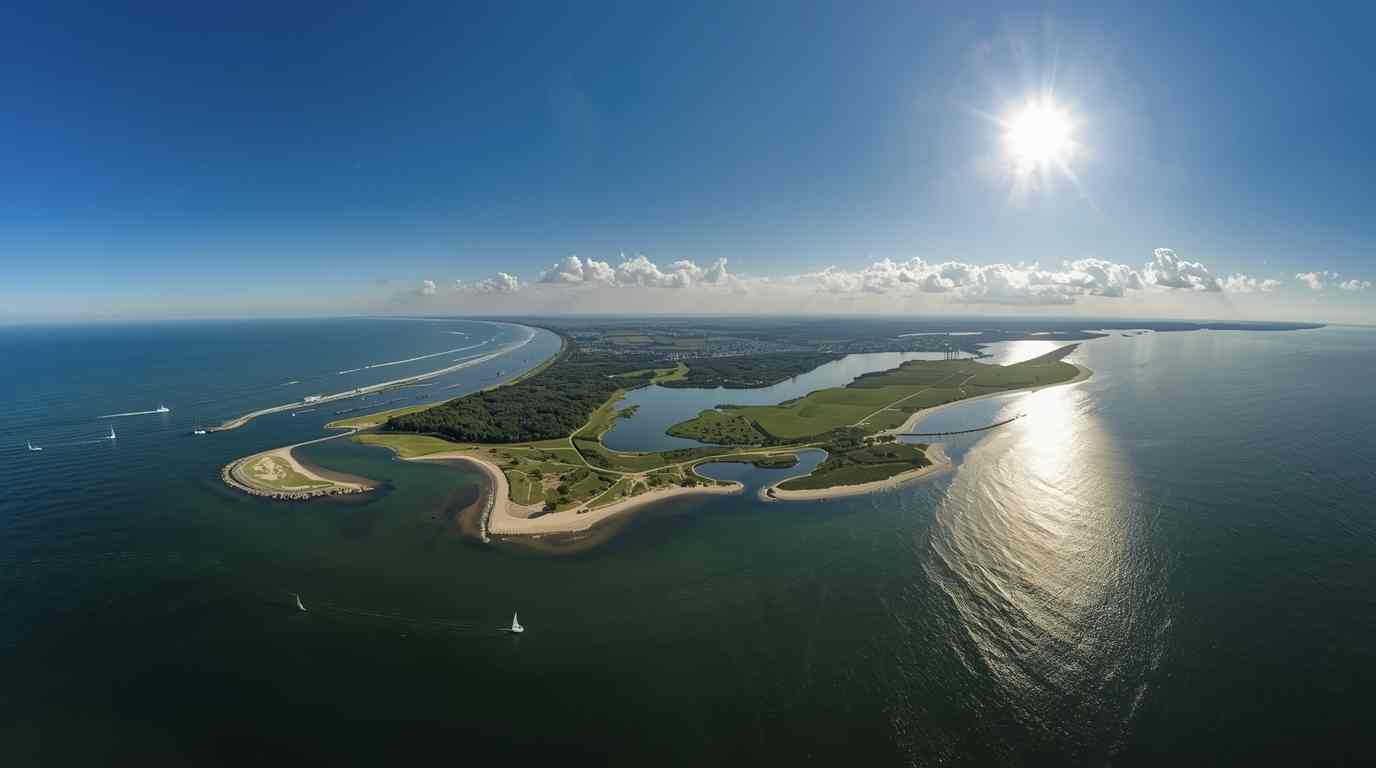
You know that feeling when you’re driving along the North Fork of Long plum island southold ny 11957, past the vineyards and the farmstands, and you catch a glimpse of something across the water? Something that feels… separate. Guarded. Off limits.
For decades, Plum Island has been that shadow on the horizon for locals and tourists alike. The island sits just off the coast of Southold, a sliver of land with a zip code that feels almost mythical: 11957. People see it from Orient Point. They hear the whispers. They wonder what actually happens out there.
I grew up hearing stories about Plum Island. My uncle used to say it was where they sent things that didn’t have a name yet. That always stuck with me.
The thing is, most of what people think they know about this place is a mix of half truths, old rumors, and genuine mystery. And after digging through declassified documents, property records, and interviews with former employees and locals, I’ve come to realize something: the real story of Plum Island Southold NY is actually more fascinating than the fiction.
Let’s walk through it together. Not like a textbook. More like we’re sitting at a picnic table at a North Fork brewery, and I’m telling you what I’ve pieced together over the years.
What Exactly Is Plum Island? The Land, The Location, The Legend
First things first. Plum Island is an 840 acre island in Suffolk County, situated about a mile and a half off the northern tip of Long Island’s North Fork. The zip code is officially 11957, though most mail still routes through Southold. Geographically, it sits between Orient Point and Gardiners Island, right in that tricky stretch where Long Island Sound meets the Atlantic currents.
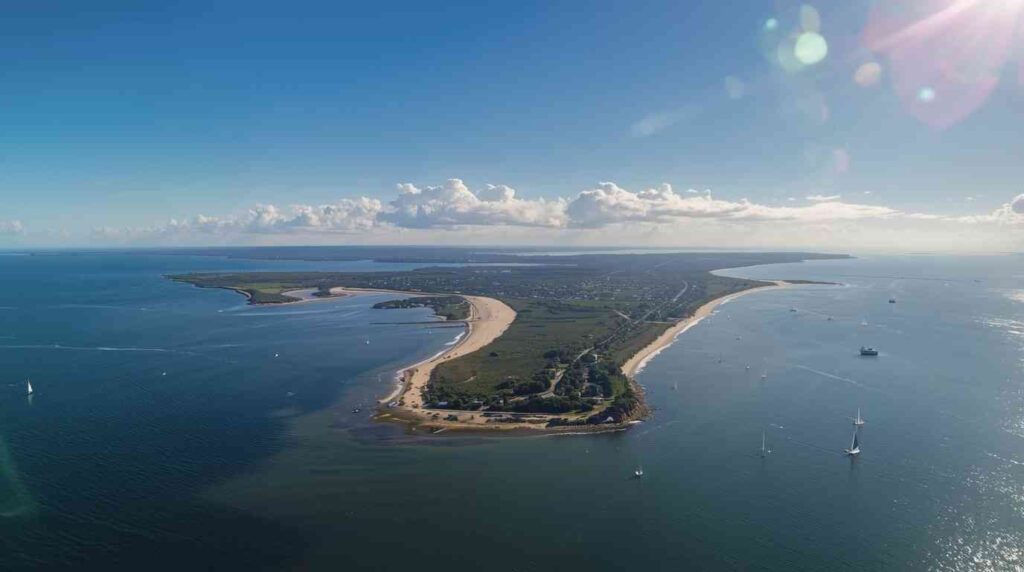
If you look at a map of Southold NY zip code 11971, you’ll see Plum Island sitting like a comma at the end of a long sentence. It’s close enough to see on a clear day. Close enough to make you wonder why you can’t just swim over.
The island has been owned by the federal government for over a century. For most of that time, it operated as the Plum Island Animal Disease Center. That’s the official name. And yes, that is exactly what it sounds like—a high containment laboratory studying foreign animal diseases.
But here’s where the confusion starts.
For generations, people have attached all sorts of labels to this place. “Mad scientist island.” “Where the government tests biological weapons.” “Area 51 of the East Coast.” I’ve heard everything from Lyme disease conspiracies to claims that the Montauk Project had a satellite facility out there.
None of that is true. Well, mostly.
What is true is that the Plum Island Animal Disease Center was one of the most secure biological research facilities in the world. Scientists worked with pathogens like foot and mouth disease, African swine fever, and other agents that could devastate the American livestock industry if they ever got loose.
That security bred suspicion. And suspicion, over time, became legend.
How Plum Island Operated For Over 60 Years
To understand the Plum Island Southold NY 11957 mystery, you have to understand how the place actually functioned day to day. Because it wasn’t some creepy castle on a hill. It was a working laboratory. A weird one, sure. But a workplace nonetheless.
From 1954 until 2023, the facility was run by the Department of Homeland Security and the USDA. Scientists and support staff would commute by ferry from Orient Point every morning. They’d badge in, suit up, and work with diseases that required biosafety level 3 and 4 containment.
We’re talking about serious protocols here. Air locks. Shower in, shower out. Waste incinerated on site. Everything designed to keep what was inside from ever getting outside.
I talked to a former researcher once—he asked not to be named—and he described the daily commute as surreal. “You’d leave your normal life in Southold, get on the boat, and twenty minutes later you’re on an island where the coffee cups have to be sterilized before they leave the cafeteria. It was like two different worlds.”
For decades, Plum Island employed hundreds of people from the surrounding communities. Southold, Greenport, Orient. If you grew up on the North Fork, you probably knew someone who worked there. Maybe a neighbor who was always vague about their job. Maybe a parent who couldn’t talk about their workday at dinner.
That secrecy wasn’t malicious. It was regulatory. Researchers signed nondisclosure agreements. They worked with classified agricultural data. But to outsiders? It looked suspicious. And when people don’t understand something, they fill in the gaps with their own stories.
The Real “Hidden Truth” Nobody Talks About
So what’s the actual hidden truth?
Not biological weapons. Not alien spacecraft.
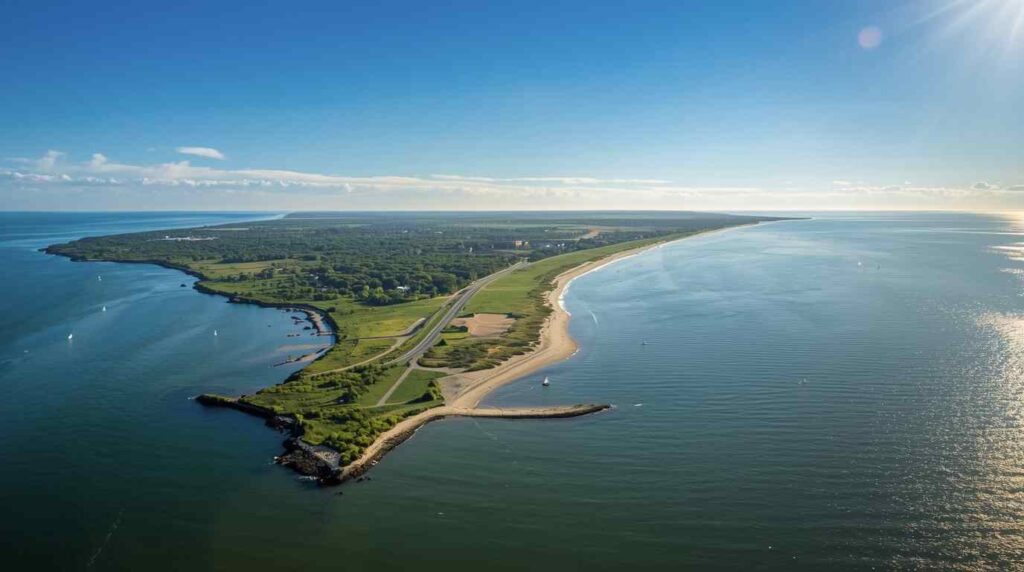
The real secret—the one that actually matters—is that Plum Island has been quietly sitting on one of the most ecologically significant and historically layered pieces of land on the East Coast, and the government nearly sold it off to the highest bidder without anyone fully understanding what they were giving away.
Let that sink in.
While everyone was distracted by conspiracy theories, the real story was about land use, preservation, and a quiet fight that lasted over a decade. The question wasn’t “what are they hiding in the lab?” It was “what happens to the island when the lab leaves?”
Because in 2023, the research operations officially moved to a new facility in Kansas. The Manhattan campus of the Department of Homeland Security took over administrative functions. And suddenly, Plum Island was… empty.
An 840 acre island with centuries of history, untouched beaches, old military fortifications, and a fully functional research complex. And the government’s plan? Sell it. Auction it off to private developers.
This is where things get interesting.
The Fight to Save Plum Island Southold NY
For years, conservation groups, local residents, and even some former researchers pushed back against the sale. They argued that Plum Island wasn’t just a government facility. It was part of the North Fork’s identity. Part of its ecology. Part of its history.
Here’s something most people don’t realize: because Plum Island was restricted for so long, much of it remains remarkably pristine. The beaches haven’t been touched by development. The forests are old growth in places. The waters around the island are vital habitat for seals, shorebirds, and fish.
A 2019 report from the National Parks Conservation Association found that Plum Island supports over 200 bird species, including the endangered piping plover. The waters surrounding the island are a critical nursery for striped bass and other commercial fish stocks. If you look up plum island suffolk county in conservation databases, you’ll find it listed as one of the most ecologically intact coastal properties in the region.
According to a detailed analysis published by The Nature Conservancy in 2020, “the island’s location within the Long Island Sound ecosystem makes it irreplaceable for migratory birds, marine life, and coastal resilience. Development of the island would have cascading environmental consequences that extend far beyond its 840 acres.”
Let me give you a statistic that stopped me cold when I first read it: the National Park Service estimated that Plum Island’s undeveloped coastal habitat provides storm surge protection valued at over $12 million annually to the surrounding mainland communities. That’s not speculation. That’s a calculated figure based on the island’s natural ability to absorb wave energy and reduce flooding during hurricanes and nor’easters.
So when we talk about “hidden truth,” maybe it’s this: the most valuable thing on Plum Island was never the lab. It was the land itself.
What’s Actually Happening There Now?
As of 2026, Plum Island is in a strange transitional phase. The research facility is largely vacant, though some administrative operations remain. Homeland Security still controls access. You cannot visit. You cannot tour. The ferry still runs occasionally, but only for authorized personnel and occasional maintenance crews.
But the legal battle over the island’s future is ongoing. In 2021, Congress passed a law that paused the sale and required a formal appraisal and public review process. Conservation groups, including the Preserve Plum Island Coalition, have been pushing for the island to be transferred to the National Park Service or a similar public trust.
There’s precedent for this. Remember when people thought the government was just going to sell Plum Island? They almost did. A private developer bid over $40 million for the property in the early 2000s. The deal fell through when locals realized what was happening and organized.
Now, there’s a growing movement to turn Plum Island into a national park or wildlife refuge. Imagine that. A place that’s been closed to the public for nearly a century, suddenly accessible as protected open space. Kayaking around the shoreline. Birdwatching trails. Interpretive centers explaining the strange history.
It’s not guaranteed. The politics are complicated. But for the first time in generations, the idea of Plum Island as a public resource feels possible.
The Real Estate Confusion Around Plum Island
Let’s talk about something that drives local real estate agents absolutely nuts.
People search for “plum island ny for sale” or “plum island sold” thinking they’re going to buy a piece of this infamous island. I’ve seen it happen. City buyers with too much money and too little local knowledge see “Plum Island” in a listing and think they’re getting a waterfront deal.
Here’s the truth: you cannot buy property on Plum Island. It’s federally owned. There are no private homes. No land for sale. No recent sales. When you see “plum island recently sold homes” in search data, those are almost always properties in Southold, Orient, or East Marion that use “Plum Island views” as a selling point.
And honestly? That’s fair. If you own a house on the North Fork with a clear line of sight to the island, you’ve got something special. Those views are part of the local character. People pay a premium for them.
What you can find are properties in Southold NY Zillow listings that mention Plum Island in the description. There’s a whole micro market around homes on Plum Island Turnpike, which runs along the North Fork’s northern shore. That road name confuses outsiders constantly. People call me and say “I found a house on Plum Island!” and I have to gently explain that no, you found a house on a road that was named after the island you can see from your backyard.
There’s even a quirky address pattern that pops up in searches: 1 plum bush rd suffern ny, 1 plum court nanuet ny, 1 plum lane plainview ny 11803. These aren’t related to the island at all. They’re just streets with “plum” in the name scattered across New York. Same with 2 plum island turnpike newburyport ma, 3 plum court katonah ny, 4 plum island blvd newbury ma. They share a name but nothing else. It’s one of those weird geographic coincidences that makes local search data so messy.
Why People Can’t Stop Searching for Plum Island Southold NY
Here’s what I’ve noticed after years of watching this topic. The searches don’t slow down. People keep typing “plum island southold ny 11957” into Google. They keep asking about plum island ny zip code and plum island orient ny. They want to know if they can go there. They want to know what happened there. They want to know if the stories are true.
I think it’s because Plum Island occupies a unique space in the American imagination. It’s close enough to feel familiar—a short ferry ride from one of the most beautiful parts of Long Island—but just far enough to feel forbidden. We’re drawn to places we’re not supposed to go.
And there’s a deeper layer too. Plum Island represents something we don’t talk about enough: the tension between national security and local community. For seventy years, this island operated as a closed system, serving federal priorities while sitting in the backyard of working class fishing towns and farming communities. The people of Southold watched the ferry come and go every day. They heard the rumors. They kept their own counsel.
That’s a long time to have a mystery in your backyard.
Limitations and Ongoing Concerns
I’d be doing you a disservice if I painted Plum Island as just a misunderstood nature preserve waiting to happen. There are real concerns that come with the territory.
The facility handled dangerous pathogens for decades. While the government maintains that no disease ever escaped the lab, there are lingering questions about environmental contamination. Soil testing has been ongoing. The wastewater treatment system, originally built in the 1950s, has been a point of contention between environmental regulators and the Department of Homeland Security.
There’s also the question of what to do with the existing infrastructure. The Plum Island Animal Disease Center buildings are old. Some date back to the 1950s. They contain hazardous materials. Asbestos. Lead paint. Chemical residues. Decommissioning the site properly will cost hundreds of millions of dollars.
Nobody wants to inherit a cleanup problem. That’s part of why the transfer to a public agency has been so slow. Who pays for the remediation? Who assumes liability if something was missed?
These aren’t conspiracy theories. They’re the boring, expensive, real world challenges that come with turning a secret government lab into a public park.
Comparison: Plum Island vs. Other Restricted Islands
It helps to put Plum Island in context with other islands that have similar histories. Governors Island in New York Harbor was a military base for 200 years before becoming a public park. That transition took decades and cost billions. But today, it’s one of the most beloved green spaces in the city.
Angel Island in San Francisco Bay was an immigration station and military installation before becoming a state park. Alcatraz went from federal prison to national recreation area.
The pattern is there. Restricted islands often become public treasures if there’s enough political will and community support.
Plum Island has advantages those other sites didn’t. It’s smaller, which makes management more feasible. It’s ecologically intact, which reduces restoration costs. And it has a motivated local constituency that has already proven they can organize effectively.
The question isn’t whether Plum Island could become a park. The question is whether the federal government will let it happen before developers make an offer that’s too good to refuse.
What Visiting Plum Island Might Look Like Someday
Let’s imagine, for a moment, that the preservationists win. That Plum Island Southold NY 11957 becomes a protected area. What would that actually look like?
I think about the old fortifications from the Spanish American War era that still stand on the island’s eastern shore. Concrete bunkers overgrown with beach grass. Gun emplacements that once guarded the entrance to Long Island Sound. Those could become interpretive sites.
The research facilities themselves could be partially preserved. Not the lab spaces—those will probably be demolished. But the original ferry terminal. The old administrative buildings. The housing for scientists. There’s a weird architectural history there that deserves documentation.
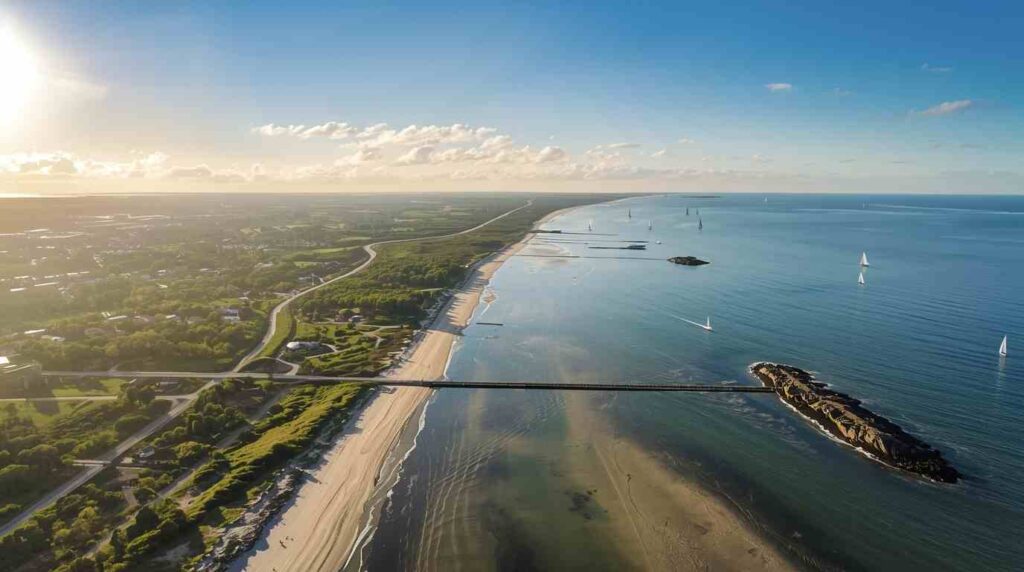
And then there’s the natural side. The beaches that have seen maybe a few hundred human visitors in the last century. The seal colonies that haul out on the rocks in winter. The bird populations that use the island as a migratory stopover. All of it waiting to be experienced in a way that’s sustainable and respectful.
A former Plum Island employee once told me that the best part of working there was the quiet. “You’d finish a day in the lab, step outside, and there was nothing but wind and water. No cars. No noise. Just the island. I’d walk the shoreline some evenings and think, nobody else gets to see this. And that felt wrong somehow. Like it should be shared.”
Maybe one day it will be.
Frequently Asked Questions
Can you visit Plum Island Southold NY 11957?
No. The island remains under federal control and is not open to the public. Access is restricted to authorized personnel only. There are no tours, no public ferries, and no visitation programs currently available.
What is the Plum Island zip code?
The official zip code is 11957, though the island is served through the Southold post office. When mail is addressed to the island, it typically routes through Southold NY 11971.
Is Plum Island for sale?
Not currently. While the federal government previously attempted to sell the island through a public auction, those plans were paused by Congress. Ongoing legislative efforts aim to transfer the island to public ownership for conservation purposes.
What was Plum Island used for?
From 1954 to 2023, the island was home to the Plum Island Animal Disease Center, a high containment laboratory that studied foreign animal diseases to protect the U.S. livestock industry. Prior to that, it was a military installation dating back to the Spanish American War.
Why is Plum Island famous?
Plum Island gained notoriety due to its secrecy, high security, and the nature of its research. Pop culture references, including the novel The Plum Island Conspiracy and various conspiracy theories, contributed to its mysterious reputation.
Are there homes on Plum Island?
No private residences exist on the island. Housing on the island is limited to former government employee quarters, all of which are currently vacant or used for administrative purposes.
What is the Plum Island Southold NY 11957 address used for?
This address is primarily used for federal government correspondence related to the island. Private individuals cannot receive mail at this address.
What happened to the Plum Island Animal Disease Center?
The research operations relocated to a new facility in Manhattan, Kansas, in 2023. The Manhattan campus now houses the National Bio and Agro Defense Facility, which continues the work previously done on Plum Island.
Is Plum Island safe?
Environmental assessments have found no evidence of disease transmission from the facility to the mainland. Ongoing environmental monitoring continues. The primary safety concerns relate to the condition of aging infrastructure and the need for proper decommissioning.
Will Plum Island ever open to the public?
There are active efforts to transfer the island to the National Park Service or another public land management agency. If successful, this would eventually allow for limited public access, though a full transition would likely take years due to infrastructure and environmental remediation requirements.
How do I find properties with Plum Island views?
Searching Southold NY Zillow listings with keywords like “waterfront,” “sound views,” or “Plum Island” can help. Local real estate agents familiar with the North Fork can also identify properties with sightlines to the island.
What is the history of Plum Island before the lab?
Before the federal government acquired it in the 1820s, Plum Island was used by indigenous peoples for seasonal fishing and hunting. It later became a private estate before being fortified as a military installation in the late 1800s. Fort Terry, built in 1897, remained active through World War II.
The Final Takeaway
Look, I get why people are drawn to Plum Island. It’s the last real mystery on a stretch of coastline that’s been picked over, developed, and documented. It’s a blank spot on the map that sits in plain sight. That’s rare. That’s valuable.
But the hidden truth I’ve come to understand—the one that took years of following property records, conservation filings, and local politics to piece together—is that Plum Island Southold NY 11957 was never really about what the government was hiding. It was about what the government was protecting without meaning to. An island left alone for generations. A landscape that time forgot. A place that, against all odds, survived the 20th century without being turned into condos.
Maybe that’s the real secret. Not a conspiracy. Just an accident of bureaucracy that gave us something precious.
The fight now is whether we keep it that way.
I don’t know what’s going to happen. Nobody does. The legislation is slow. The money is complicated. The politics shift with every election. But for the first time in decades, there’s a real chance that Plum Island becomes something more than a rumor. Something more than a zip code that people type into search engines late at night, wondering what’s out there.
Maybe someday soon, you’ll be able to see for yourself. Until then, it’s still out there. Just off the coast. Waiting.
For more information visit the website
Or
“See Also” Warden St Boys Hostel Ghodegaon
